OPINION: from entertaining to retainingDANIEL HAVEMAN, LEAD ARCHITECT, INDG
Today, when people hear the word 3D they automatically associate it with entertainment. Just think about 3D movies, 3D televisions and 3D gaming. But 3D technology is a lot broader than that, impacting manufacturing, visualisation and ……
Today, when people hear the word 3D they automatically associate it with entertainment. Just think about 3D movies, 3D televisions and 3D gaming. But 3D technology is a lot broader than that, impacting manufacturing, visualisation and interaction.
A brief history
Let’s dive a little more into the history first; 3D technology has been around for quite a long time. In the early 60′s, developments of 3D surface reconstruction have led to the initial stages of computer aided design (CAD) in the automobile and aircraft industries, and subsequently computer aided manufacturing. 3D in gaming and movies has also been around for longer than you may realise, starting in the early 80′s, with 3D projection in Jaws (1984), CGI in Tron (1982) and with gaming on arcade cabinets such as Space Harrier (1985). The development of affordable 3D graphics hardware in the late 90′s has resulted in now nearly every computing device, including phones and TVs to have these capabilities on board.
3D experiences in the hand of the consumer
The exponential increase in computing power in tablets and smartphone combined with the rise of broadband internet has literally put photorealistic 3D experiences in the hands of the consumer. This has paved the way for 3D technology to reshape industries, by using this technology to replace photography, and create experiences that weren’t possible with traditional methods.
The path of innovation
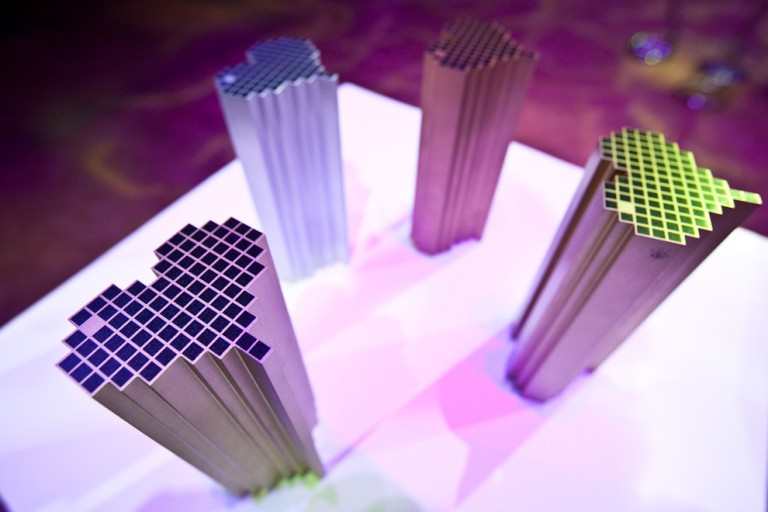
Meanwhile, 3D is continuing its path of innovation. New production methods like 3D scanning and printing are revolutionizing product prototyping, mass-customization, consumer creation and more. This allows for new design possibilities, creating structures that weren’t available before. We are in the advent of a new era in which mass customization becomes mainstream and the consumer becomes the main character in the brand story, designing and creating his own personal products. With tools such as augmented reality even allowing them to see these new products before they have been manufactured, as real as any finished product in stores.
3D enabling an omni-channel product story
INDG is currently producing a major part of all product visualizations (photos and videos) for consumer product brands such as Philips. For consumer product brands, 3D enables to sell products as part of a story, not in a ‘book’ but in a ‘virtual theater’. The product can be the hero in this world. This allows brands to shape, augment and enhance their brand and product stories in-store, on the go or at home. After capturing a product in 3D, the so-called 3D master asset (a digital copy of the actual product) can be the input for everything. As a result, 3D can be applied across the complete product life cycle from design and manufacturing to retail and customer care. Using INDG’s Product Engagement Suite, it is possible to visualize these products wherever needed; in an interactive 3D web experience, in interactive applications, in stores, or using the latest augmented reality technology at home.
Enabling contextual content
For most consumer product brands, it is becoming crucial to differentiate their products to smaller consumer segments. To reach these segments, brands will have to engage on an individual basis using a wide range of touch points and devices. This poses an immense challenge: sourcing high-impact visual product content for any consumer context. As a result, brands need on-demand delivery of consistent, high quality product content at a larger scale than ever before. For this need, 3D modeling and computer generated imagery is becoming crucial since traditional (camera recorded) photos and videos cannot fulfill this need anymore.
Current possibilities with 3D are already very cool. Retailers such as IKEA already adapt images for cultural differences in models – localization, scalability and targeting. The modularity offered through 3D-based imagery allows brands to offer a realistic, personalized experience that drives consumer engagement. Consumers spend more time experiencing product online, return more often to discover more and are much more confident to buy online.